Rings, loops and springs
Three Sonic elements are named in the store description, all in the same sentence as Spin Dash. That sentence is the whole official explanation.
The store names rings, loops and springs as the classic Sonic elements added to the puzzles, in the same sentence as Spin Dash. Their exact behaviour per stage is not documented, so this page sticks to what the copy and stills show.
Three Sonic elements are named in the store description, all in the same sentence as Spin Dash. Rings. Loops. Springs.
That sentence is the entire official explanation of how they work. There is no follow-up paragraph, no screenshot that clearly shows one, and no achievement that references any of the three. So this page sticks to what the copy claims and what the official stills can be read to support.
Three names, no descriptions
| Element | Named in | Behaviour stated | Behaviour not stated |
|---|---|---|---|
| Rings | Store description, Nintendo listing | Present as Sonic-series gameplay elements | What collecting them does |
| Loops | Store description, Nintendo listing | Present as Sonic-series gameplay elements | Whether they are track, geometry or a set piece |
| Springs | Store description, Nintendo listing | Present as Sonic-series gameplay elements | Launch height, direction, whether player-triggered |
All three are named. None is described beyond its name.
That is not a gap this guide can close. It is the state of the published material for a game that launched one day before this page was checked.
What the names still say
In a crossover, the mechanics a studio chooses to license are a statement about what the collaboration is for. TECOPARK and SEGA did not add Sonic's rings as cameos in the background. The store copy lists them alongside Spin Dash as the things that make this a Sonic game rather than a PICO PARK game with a skin.
Read as a set, the three names describe movement:
- Rings are collectibles in every Sonic game. They are the reward layer.
- Loops are traversal geometry. They are the speed layer.
- Springs are vertical launchers. They are the position layer.
So the crossover's contribution is a set of movement and reward tools layered onto a puzzle game that previously had only walking, carrying and stacking. That is a coherent design story, and it is the most any public source supports.
Six stills, no rings
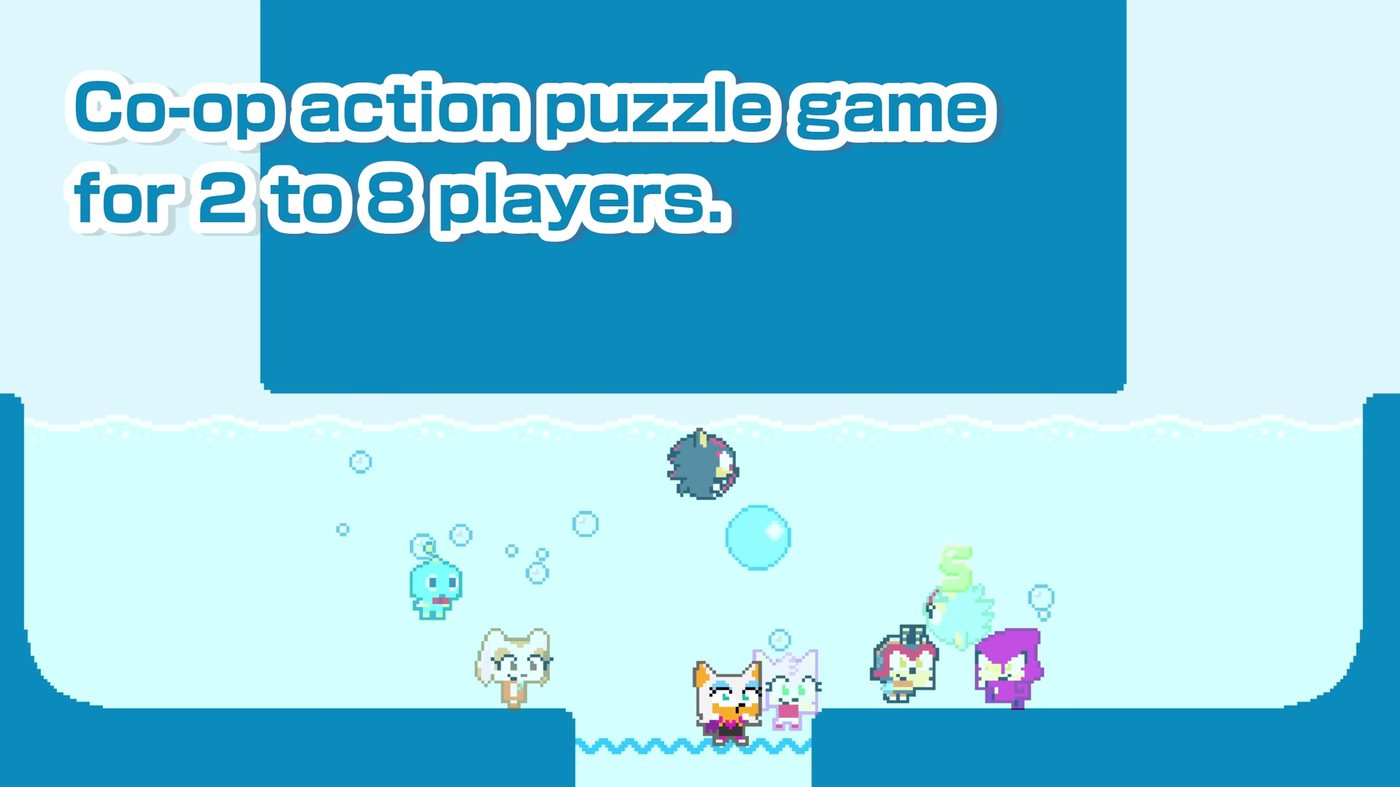
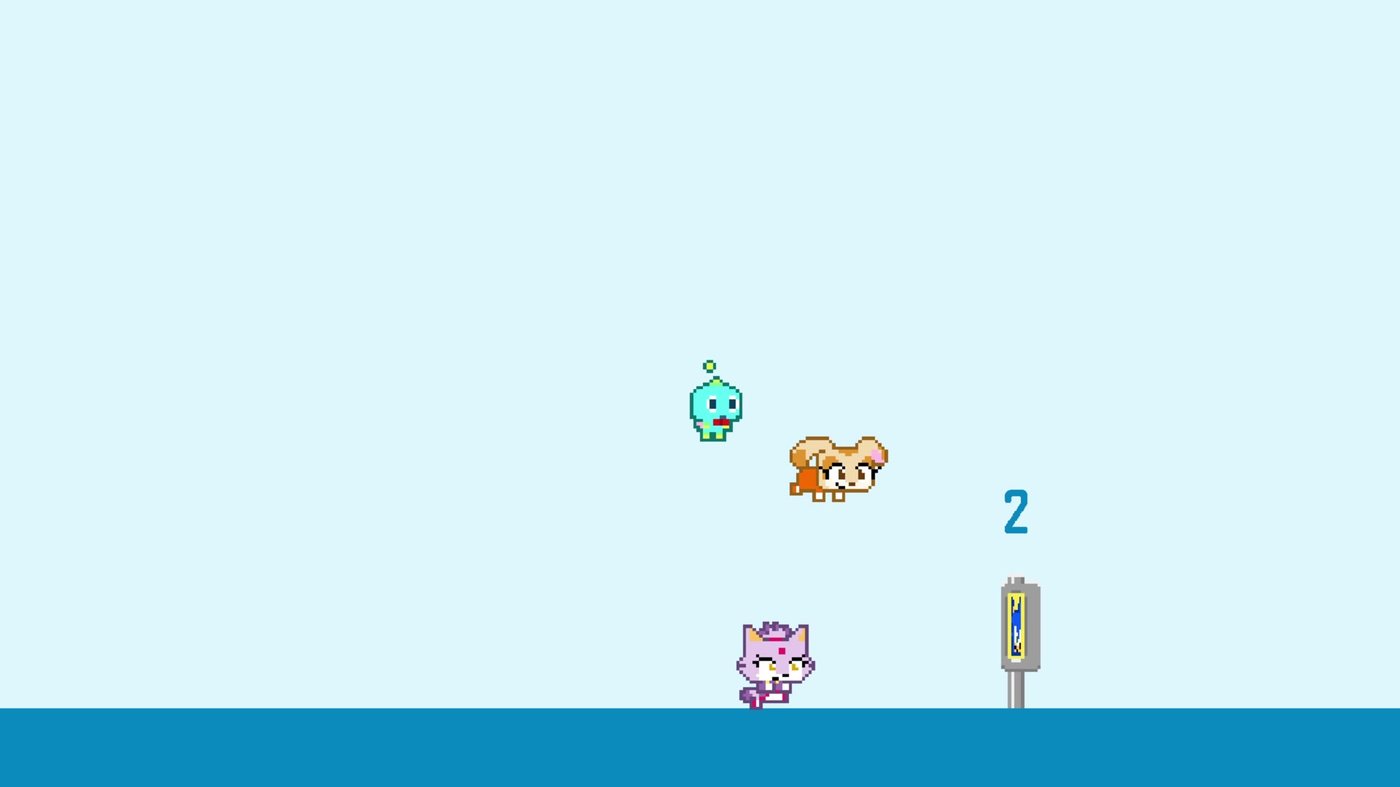
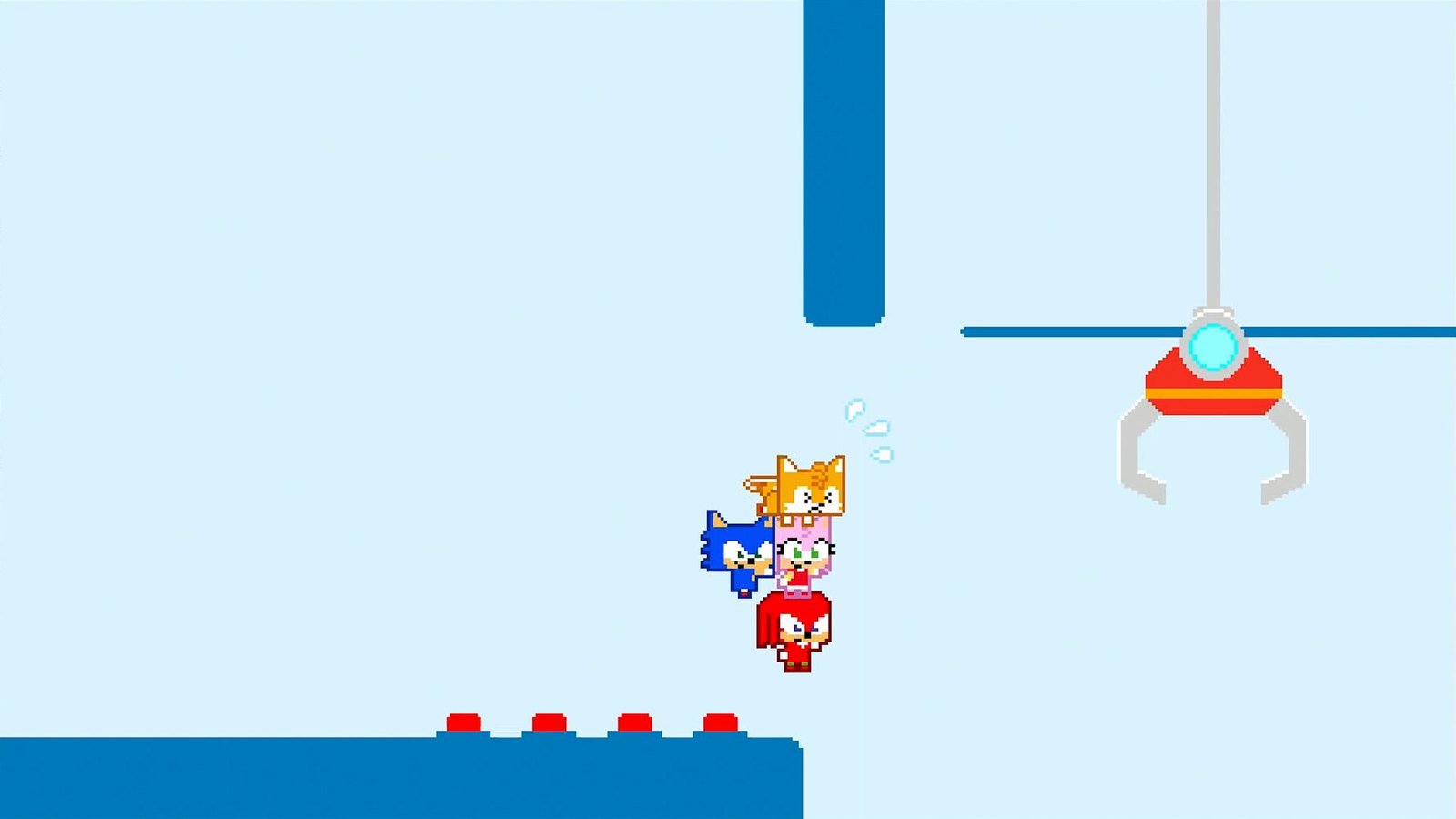
Six official screenshots at 1920 by 1080. Between them, none clearly shows a ring, a loop or a spring in a way that can be identified without guessing.
That is worth stating plainly rather than pretending otherwise. A typical Sonic trailer leans hard on rings and loops as visual signatures. This one does not, and neither do the stills. The one caption card that mentions the mechanics calls them "many gimmicks unique to the SONIC series" without naming any.
How they likely touch the goal plate
This is inference, clearly labelled. The goal plate requires every player to arrive. A launcher (spring), a track (loop) and a collectible (ring) each change what "arriving" means:
A spring turns arrival into a two-stage problem. Somebody has to be launched, and somebody has to be there when they land. In a game where the group must stay together, a launcher that separates players is a puzzle, not a shortcut.
A loop implies momentum. If a loop only works at speed, then Spin Dash is the key that opens it, which is why the store names them in the same sentence.
A ring is a reason to deviate. In a co-op game where the goal is the only win condition, a collectible adds a second objective. Whether rings affect clearing a stage at all is not stated.
Trying them in a session
- Treat rings as optional until proven otherwise. No achievement references them, which suggests they are not required for progression.
- Test the spring direction before committing the group. Springs in Sonic games are directional. A launcher that sends one player somewhere the rest cannot follow is a fail-state in a co-op game.
- Try a loop at speed. If the loop is real geometry, walking into it will do nothing and a dash will not.
- Report back. With no published mechanics documentation, the community's first week of testing is going to be the actual reference for how these three behave.
Spin Dash rides in the same sentence
Spin Dash. The store lists all four together: "lets every playable character use Sonic's iconic Spin Dash, while adding classic Sonic-style gameplay elements such as rings, loops, and springs". The dash is the ability; the three are the stage furniture it interacts with.
The Spin Dash page covers the ability in depth, including the achievement that proves it can be used against your own team. And how to play puts the whole set in the context of the goal plate rule.